Mrs Nathan, grade this post :P.
First of all, to put this discussion into perspective, what has been the one thing that has survived through the ages, since early man's primitive age to today's modern, advanced age? Sports.
The existence of sports in our world is known by every single human being, young or old, rich or poor, male or female. Let's explore the force, the overwhelming force that compels us, the force behind sports.
What is sports? A pastime or hobby? A way to exercise? An avenue of destruction? Or perhaps the human instinct marshalled into a form accepted by the conventions of the time, given direction by its creators and set loose to forever roam the earth? It may be all of the above, and yet it may be none at all. Sports come in every conceivable manner, from cyber gaming (also a sport, by the way) to American football. We can easily see the great spectrum of sport's manifestations, and thus we must question, what exactly classifies a sport? Is it something that requires intense training, is it something that must always require competition to determine a winner? Maybe not the former, in some cases like recreational sports, but in our modern world, the latter is a given.
What is it about sports that has enabled it to stay "in" and not fade away like many other monuments, many other religions, even through hundreds and thousands of years? Is it the fact that it transcends race, religion, and the social ladder? Is it the fact that anyone and every one of us has an equal chance at making it big in sports? What about the chance to let loose on the field, to take it out on the ball, to take it out on the opposing team, to be completely yourself and not be penalised or punished? In today's society, we are forced to conform without knowing it, from birth. We are forced to be what society wants us to be. We are forced into a mold that shapes our life, right from the start to the very end, even at a funeral where certain conventions and rules must be followed. Therein lies the beauty of sports, the closest we are likely to get to true freedom.
In sports, there is always a winner, and then there is the loser. The spectators say: If winning isn't everything, then why do people keep score." The players say: Don't settle for anything less than the best." Lastly, the song was sung:"We are the champions, no time for losers." I must beg to differ from everything implied in the above three statements. Success has always been, is, and will always be the fruit of failure. Only by losing can we comprehend the nature of that we lack, the distance to our goal, and the taste of defeat. Inevitably, it is the last of the above three that spurs us on to greater heights for fear of that one taste. Thus I said sports is the closest we are likely to get to freedom, because of the simple fact that hurting others forms a liability to oneself, and in turn does not fit into the concept of freedom. In sports, one party will be hurt irregardless, and therefore it is the closest, but not quite there yet.
What is it about sports that has caused its flames to never die out? Is it because it has been the one thing that is constant in that it is not and never will be constant, and therefore can never been correctly and perfectly predicted? We may never know.
Thursday, August 28, 2008

Wednesday, May 21, 2008
English Personal Commentary
Mrs Nathan please grade this post and this post only...!
In the recent discussion done with teammates Ting Wei, Sing Yee and Jiacheng, our group concluded that democracy was superior to communism in creating a stable country and society, for the various reasons listed in Ting Wei's blog, such as feasibility in real life and modern examples of both systems, as well as their individual advantages and disadvantages.
However, I still feel that, in my research, after reading about conservatism, I have to say that I see more future in conservatism. Firstly, when a people have been restrained from certain, shall we say, elements which may or may not be favourable to society, for example prostitution and tax rebates, the people will tend to think radically of these missing elements, so when the government happens to make a suggestion, even if it is in passing, the public will pounce on it like a pack of hungry hyenas on a deer. The reason for this is that since it is missing from their lives, it has been given an elevated position in society. It's just like in the case of a mischievous boy, if his mother tells him not to play computer games while she goes shopping, all the more he feels that doing this "forbidden act" has more "kick" as compared to, say, reading a book. Thus, if a government happens to suggest legalising prostitution, obviously men would be all for it, seeing that prostitution has always been illegal. As such, democracy is not able to bring across radical ideas in a controlled manner, causing more attention to the matter at hand than is good.
On the other hand, conservatism, "a political philosophy that tends to support the status quo and advocates change only in moderation", is a system where past merits of certain traditions or way of dealing with matters are not forgotten and preserves it in the modern society. In our currrent case study, conservatism would obviously weigh the pros and cons of legalising prostitution before even announcing the possibility of the government doing so, unlike Singapore and the Integrated Resorts. And yet, with the sole reason of large national income, Singapore's government overrode all the disadvantages to its people and went ahead despite the petition signed by many people. This is not to say that conservatism does not allow the public a degree of individual autonomy, but is a philosophy against radicalism of any sort, regardless of merit, for example the Singapore Integrated Resorts.
Switzerland provides the strongest example of modern direct democracy, as it exhibits the first two pillars at both the local and federal levels. In the past 120 years more than 240 initiatives have been put to referendum. The populace has been conservative, approving only about 10% of the initiatives put before them; in addition, they have often opted for a version of the initiative rewritten by government. But see here, this only works if the populace are rational and conservative, which brings us back to conservatism.
Conservatism is not a system which does not allow for radical changes, but incremental change, where, over a period of time, that radical effect can be achieved."it is with infinite caution that any man ought to venture upon pulling down an edifice which has answered in any tolerable degree for ages the common purposes of society."This embodies the spirit and reason for conservatism.
In the short-term, democracy may see more action or reap more benefits due to its free-for-all policy where radical actions are allowed, but in the long-term, there is bound to be some radical action that set forth unforeseen consequences and thus conservatism, which restricts any of the aforementioned radical action, is still better.
In the recent discussion done with teammates Ting Wei, Sing Yee and Jiacheng, our group concluded that democracy was superior to communism in creating a stable country and society, for the various reasons listed in Ting Wei's blog, such as feasibility in real life and modern examples of both systems, as well as their individual advantages and disadvantages.
However, I still feel that, in my research, after reading about conservatism, I have to say that I see more future in conservatism. Firstly, when a people have been restrained from certain, shall we say, elements which may or may not be favourable to society, for example prostitution and tax rebates, the people will tend to think radically of these missing elements, so when the government happens to make a suggestion, even if it is in passing, the public will pounce on it like a pack of hungry hyenas on a deer. The reason for this is that since it is missing from their lives, it has been given an elevated position in society. It's just like in the case of a mischievous boy, if his mother tells him not to play computer games while she goes shopping, all the more he feels that doing this "forbidden act" has more "kick" as compared to, say, reading a book. Thus, if a government happens to suggest legalising prostitution, obviously men would be all for it, seeing that prostitution has always been illegal. As such, democracy is not able to bring across radical ideas in a controlled manner, causing more attention to the matter at hand than is good.
On the other hand, conservatism, "a political philosophy that tends to support the status quo and advocates change only in moderation", is a system where past merits of certain traditions or way of dealing with matters are not forgotten and preserves it in the modern society. In our currrent case study, conservatism would obviously weigh the pros and cons of legalising prostitution before even announcing the possibility of the government doing so, unlike Singapore and the Integrated Resorts. And yet, with the sole reason of large national income, Singapore's government overrode all the disadvantages to its people and went ahead despite the petition signed by many people. This is not to say that conservatism does not allow the public a degree of individual autonomy, but is a philosophy against radicalism of any sort, regardless of merit, for example the Singapore Integrated Resorts.
Switzerland provides the strongest example of modern direct democracy, as it exhibits the first two pillars at both the local and federal levels. In the past 120 years more than 240 initiatives have been put to referendum. The populace has been conservative, approving only about 10% of the initiatives put before them; in addition, they have often opted for a version of the initiative rewritten by government. But see here, this only works if the populace are rational and conservative, which brings us back to conservatism.
Conservatism is not a system which does not allow for radical changes, but incremental change, where, over a period of time, that radical effect can be achieved."it is with infinite caution that any man ought to venture upon pulling down an edifice which has answered in any tolerable degree for ages the common purposes of society."This embodies the spirit and reason for conservatism.
In the short-term, democracy may see more action or reap more benefits due to its free-for-all policy where radical actions are allowed, but in the long-term, there is bound to be some radical action that set forth unforeseen consequences and thus conservatism, which restricts any of the aforementioned radical action, is still better.
Saturday, March 1, 2008
The escaped detainee-Mas Selamat Kastari-a national effort?


In my opinion, I think that this is not really an issue of national security , but more of a social issue. On one hand, Mas Selamat Kastari, being the leader of terrorist group Jemaah Islamiah poses a very large threat to the community and our relatively peaceful nation of Singapore if he is left to his own ways. There are countless possibilities: he could, given time, gather his members and launch terrorist attacks such as suicide bombers or even plant booby traps to cause mayhem in crowded areas. That is, if we discount the public in helping out as well.
Right now, this wanted man has escaped and is currently still at large; we cannot deny this fact. What we can deny, however, is any possible escape route or glimmer of hope that shines for this criminal. As of now, he is completely cut off from the outside world, left without any resources whatsoever. Effectively, he is alone. If he were to be able to steal a cell phone, or even one dollar to make an international call, it would be tantamount to handing him a lifeline. Therefore, by upping our guard, not just one person, but the entire nation, we will be able to form an inescapable nationwide lock down. So what if he escaped from a detention center? Can he escape the eyes, ears and and noses of the nation's ultimate watchdogs, the citizens?
Mas Selamat's face has been pasted on every notice board in Singapore, sent to every mobile phone and every newspaper and news bulletin for the past few days. Normally, people (especially Singaporeans) would jump at receiving this much attention, but not him. It just means awareness has gone up another notch and there's nothing much he can do to stop this. Now, he cannot even go to a coffee-shop to order kopi-o.
With that in mind, I hope to appeal to all who read this blog (if any...) to bear in mind: keep a vigilant lookout for this man.
But we of course cannot overlook the media's part in this affair. Writers that write the newspaper articles, reporters that update the public periodically, and as Saturday's papers have written, media in other countries have also been alerted of Mas Selamat's escape. No matter what the world will think of Singapore, only the citizens know best.
Thursday, February 28, 2008
Some photos to share
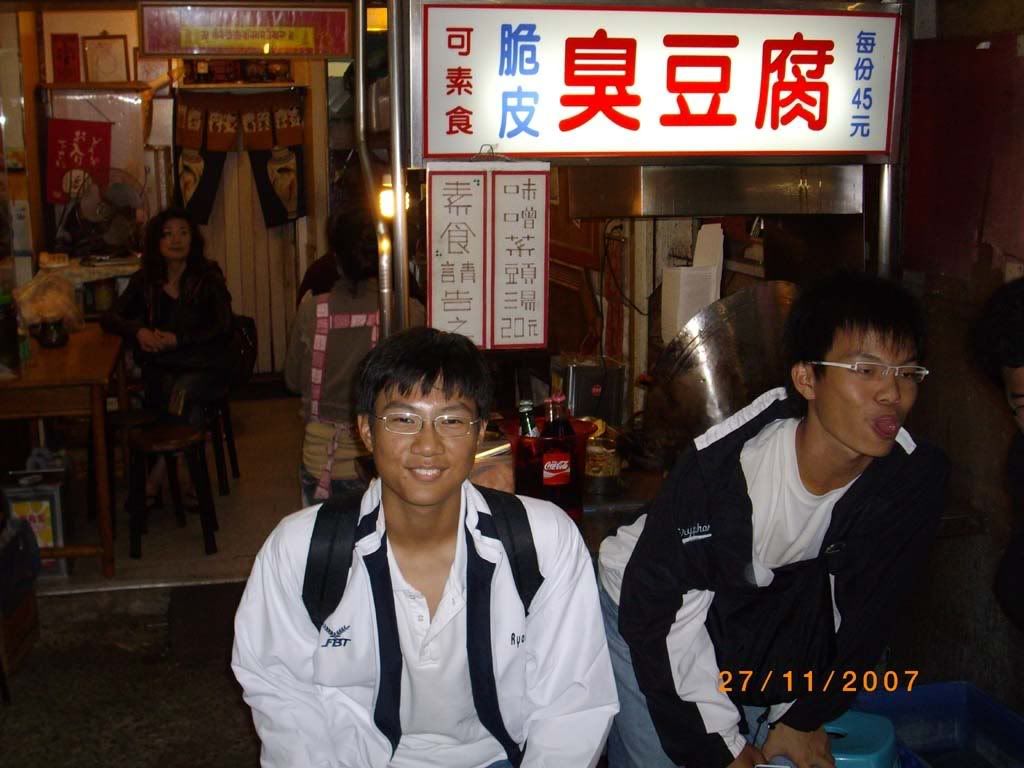 Me and Shihao at a "stinky" Tofu stall in Taiwan
 My new boots bought in Taiwan. NIKE AIR!
 Batting gloves and Yankee cap that my sis got for me in NY
 My awesome nice colourful gloves bought in Taiwan! :P
  SO MANY GLOVES! i want...
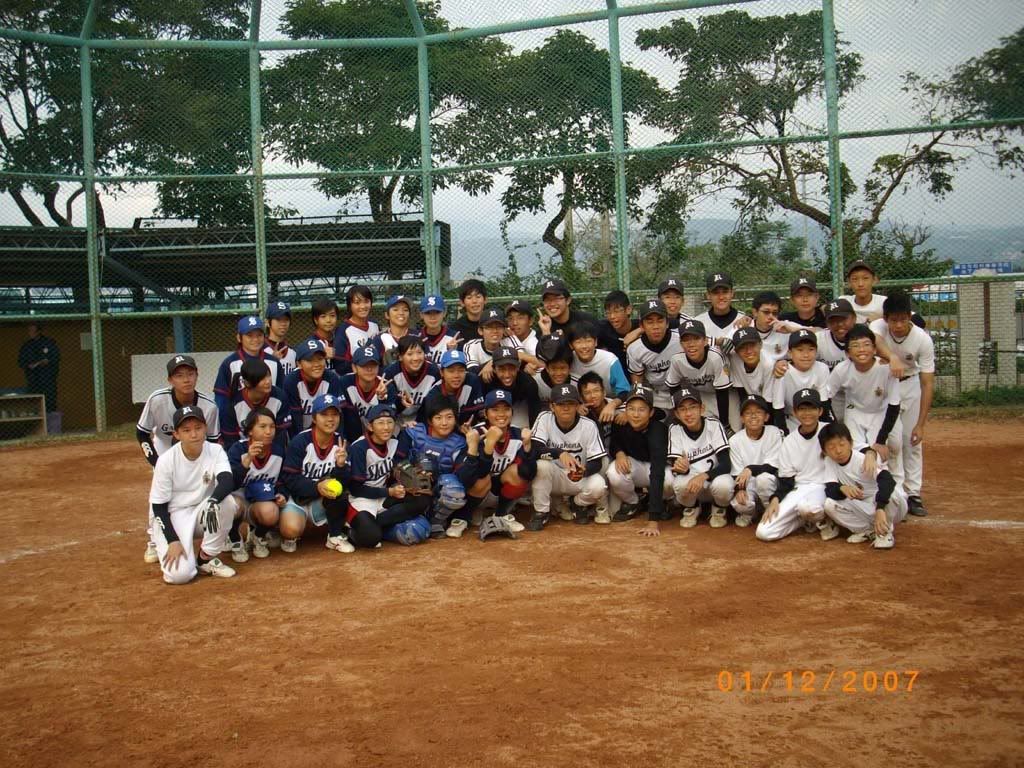 Photo with a team that RI Gryphons played against.
 Me batting in Taiwan against Chung Cheng High. 1 triple and 1 single hit
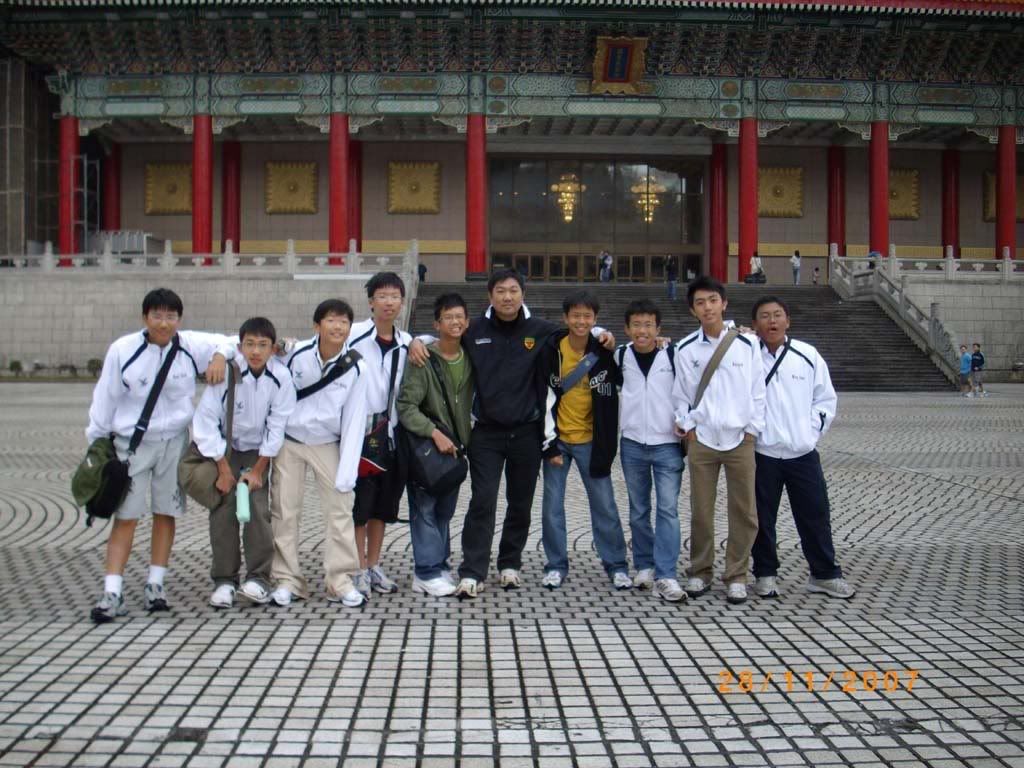 Photo with Coach and the Sec 3 batch.
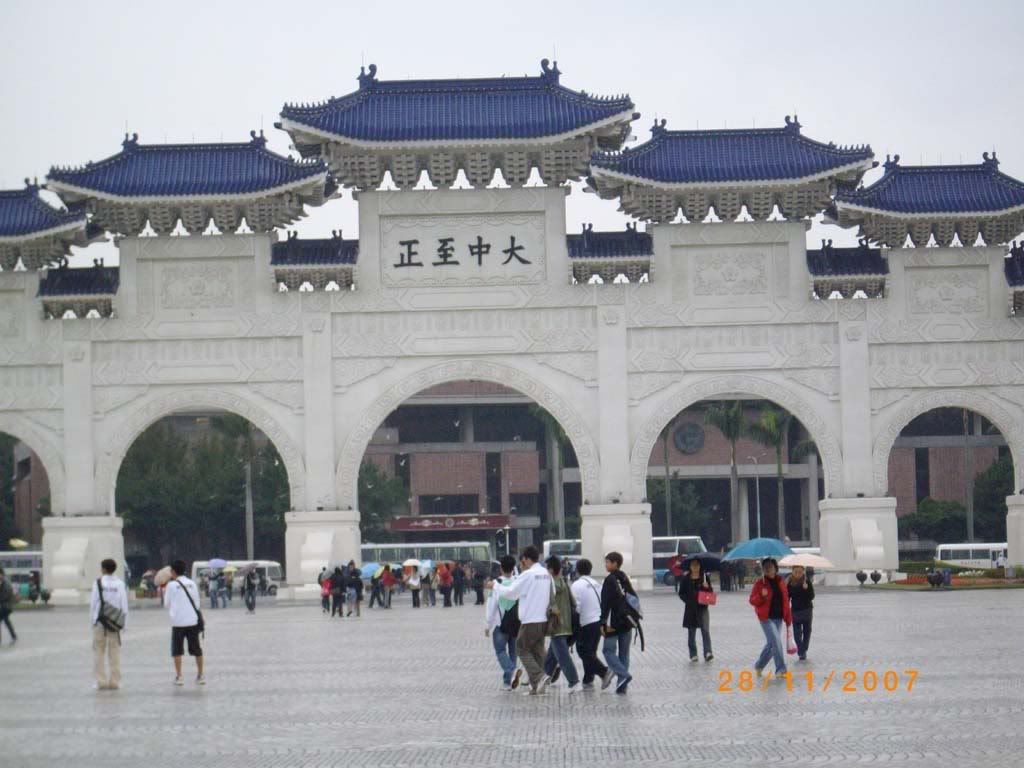 Da Zhong Zheng Zhi. No more!
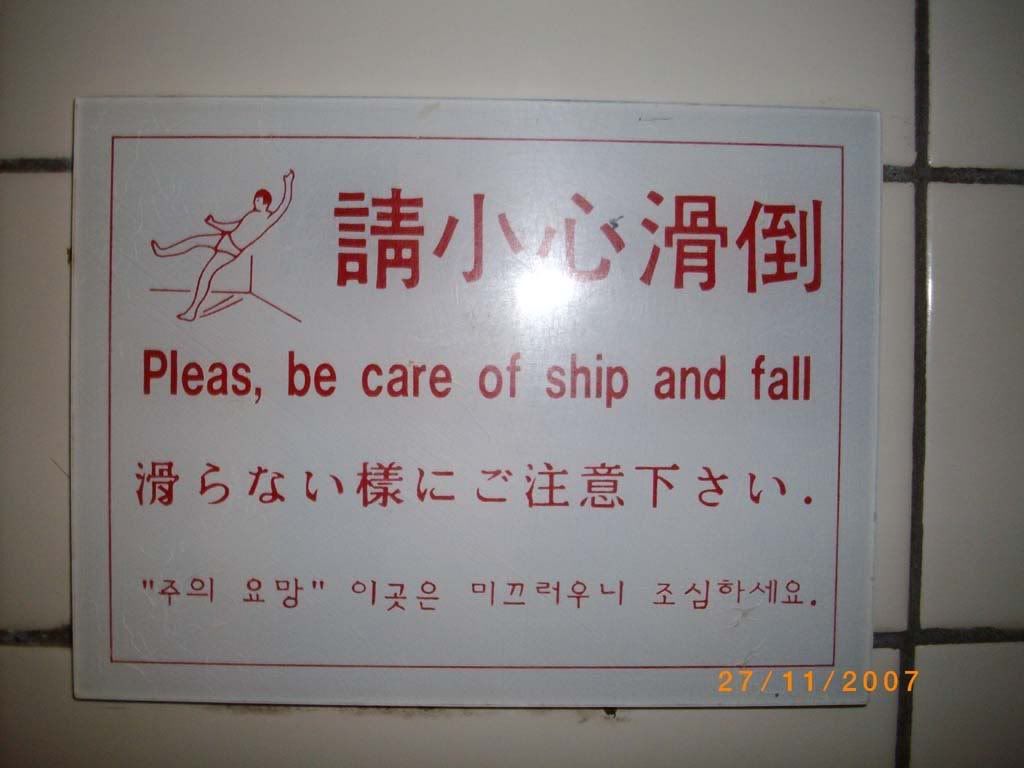 Nice Engrish!
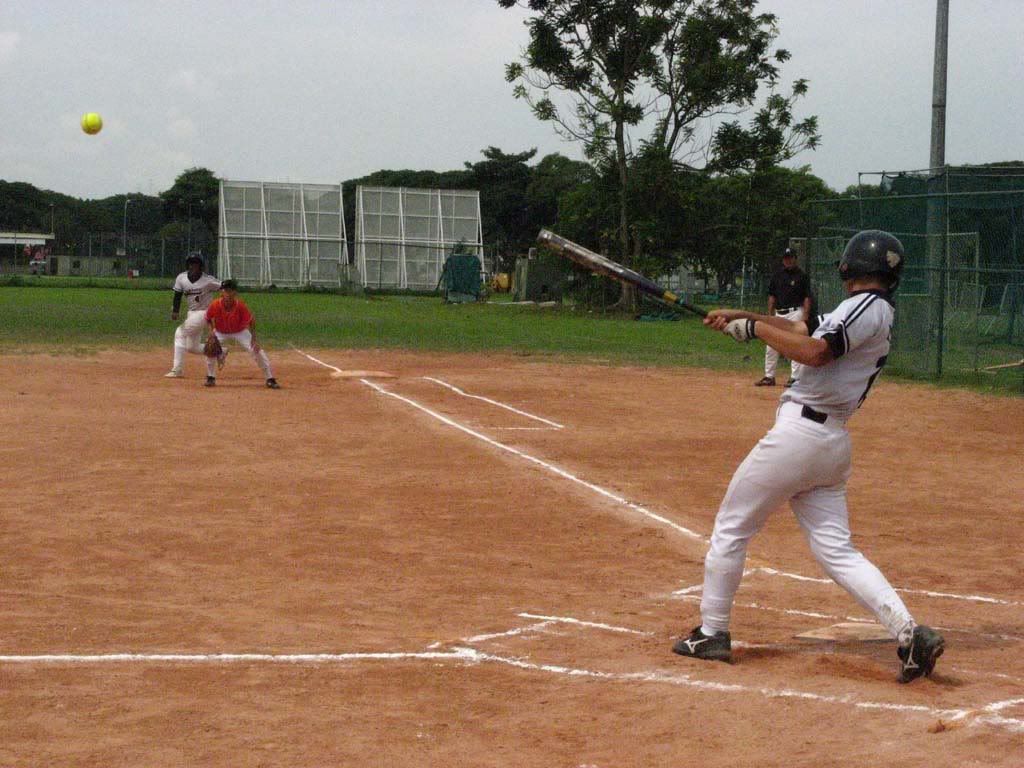 My double hit against Peicai last year.
Wednesday, August 1, 2007
研究方法和结论与感想

这个专题报告有完没完的!幸好这是最后一个了。
这就是我的研究方法:
首先,我决定要为哪一些人物写报告,然后到网上查那个人的背景资料,他对新加坡的贡献,与他值得一写的佳点。有了这些资料后,我就开始写关于那个人的报告,强调他的佳点、贡献和奋斗精神,也加进我的一些感想。
结论与感想(我国英雄,本人敬您们一杯!):
李光耀
· 1936考入莱佛士书院,1940年考入莱佛士初级学院。
· 1954年成立了人民行动党
· 1955年胜过林有福和马沙尔(MARSHALL)的劳工党
· 1957年人民行动党内的共产党人造反,后来被李光耀的朋友林有福抓去坐牢
· 1959年的大选中,李光耀的人民行动当在议会51位中获得了43个,李光耀就成为了新加坡的第一个总理
· 1963年李光耀把新加坡合并在“大马来西亚”中,以争取新加坡的独立
· 1965年,马国因为种种原因而与新加坡分散
· 为了对付因独立而来的问题,李光耀建立了新加坡武装部队,推行了国民服务,也解决了人民事业的问题
· 之后,李光耀把新加坡参入联合国,也建立了东南亚国协
· 1990年退下,吴作栋当总理,自己当国务资政
· 2004年,长子李显龙当总理,吴作栋当国务资政,而自己成为当资政
李光耀是个非常值得尊敬的人,因为他把新加坡从一个落后的小国家发展到一个繁华的国家。他的奋斗精神十分可敬,很值得我们学习。
李显龙
· 1984年当贸易工厂部的部长
· 1992年成为副总理
· 2004年成为我国的总理
· 推行了工作五天的新条律
· 建议建造综合娱乐城这工程
· 推行增长配套
· 在李显龙的领导其间,我国于中国的关系也变得更好
李显龙也是个很能干的人才。他跟随着父亲的脚步,把新加坡环球化,使我国得到全世界的敬佩。
拉惹勒南
· 1915年在斯里蘭卡出世
· 在马国学习
· 后来到新加坡继续学习
与李光耀成立了新加坡人
民行动党,进入政治
· 为了种族和谐,
创作了新加坡誓约
朱比赛
- 1907年出世于蘇门答臘的西部
- 小小年级学会拉提琴和玩吉他
- 稍微长大之后参入一个马来唱队,来到新加坡谋生,一边创作歌曲,一边为一家马来报纸公司拍照
- 在1966年 为新加坡创作了国歌
虽然拉惹勒南与朱比赛的背景万万不同,工作也不同,但是他们的共同点,是他们都为国家创作了伟大的誓约和美妙的国歌。
林谋盛
· 1909年出世与中国福建省的南岸地区
· 十多岁来到新加坡的莱佛士书院读书,长大后去香港唸大学
· 当日军侵略新加坡时,林谋盛和朋友们成立FORCE 136 来抵抗日军
· 不幸在1944年3月26日被日军抓捕,被他们折磨而死掉。
陈笃生
· 1789年在马六甲出生
· 生活环境不佳,十分贫穷
· 1819年来到新加坡来谋生
· 富有善心,捐了一大笔钱建造一间医院,让所有家境贫困的人到那儿免费治病
· 1850年去世
我认为以上的几个人都富有奋斗精神,都值得我们每一个人敬佩。他们都可立为我们学习的好榜样。就是因为有这些人的付出和贡献,我们才能拥有今天这个设备齐全,生活舒适的安宁国家。
林谋盛
· 1909年出世与中国福建省的南岸地区
· 十多岁来到新加坡的莱佛士书院读书,长大后去香港唸大学
· 当日军侵略新加坡时,林谋盛和朋友们成立FORCE 136 来抵抗日军
· 不幸在1944年3月26日被日军抓捕,被他们折磨而死掉。
陈笃生
· 1789年在马六甲出生
· 生活环境不佳,十分贫穷
· 1819年来到新加坡来谋生
· 富有善心,捐了一大笔钱建造一间医院,让所有家境贫困的人到那儿免费治病
· 1850年去世
我认为以上的几个人都富有奋斗精神,都值得我们每一个人敬佩。他们都可立为我们学习的好榜样。就是因为有这些人的付出和贡献,我们才能拥有今天这个设备齐全,生活舒适的安宁国家。
Tuesday, July 31, 2007
演变---林谋盛和陈笃生

过了一个多钟头的琢磨,我决定写林谋盛和陈笃生。
林谋盛1909年出世与中国福建省的南岸地区。他家境富有,在新加坡有个砖头和饼干工厂,十多岁来到新加坡的莱佛士书院读书,长大后去香港唸大学。当日军侵略新加坡时,林谋盛和朋友们成立FORCE 136 来抵抗日军。他在马国的怡保开间杂货店,从那儿暗地里与新加坡的线人联络和交换敌军的消息。但是他不幸在1944年3月26日被日军抓捕,被他们折磨。虽然他忍的痛是难以想象,但他却不投降。为了国家,他牺牲了自己的命。
 陈笃生1789年在马六甲出生于一位福建的父亲和PERANAKAN的母亲, 1850年去世。他生活环境不佳,十分贫穷。1819年,他到新加坡来谋生。在这里陈先生摆个摊子卖水果、蔬菜和家禽,不久后变得十分富有,在驳船码头买了一块地,而开了一间商店,赚了许多钱。那时,他富有善心,捐了一大笔钱来建造一间医院,为所有家境贫困的人免费治病。
这两位民族英雄,一个为了抵抗日军而牺牲了自己的命,一个从自己的口袋里出钱免费为穷人医病,真是很伟大!他们的所做所为使我们这一代能活得更自由自在和安宁。
Monday, July 30, 2007
比较-拉惹勒南与朱比赛

今天我交上李光耀和李显龙的透视报告之后,老师叫我们在做个比较报告,比较对新加坡有相同的贡献。回家后,我已想到了两位人物:拉惹勒南和朱比赛。
拉惹勒南出生于1915年,是新加坡的前副总理和高级部长。他的父母俩是斯里蘭卡人。他出世在斯里蘭卡,却在马国读书,后来到新加坡继续受教育。长大后,他与李光耀和其他朋友创造了新加坡人民行动党。拉惹勒南在他二十九年期间在国会服务,曾经当过外交部长(1965年-1980年), 劳方部长(1968年-1971年), 第二任副总理(1980年-1985年)和总理公署高级部长(1985年-1988年)。1988年,拉惹勒南因为年老而从国会退休。
拉惹勒南被视为新加坡的建国元勋。他对新加坡最明显的贡献是,在1966年为国家创作了新加坡誓约。
朱比赛1907年出世于门答臘的西部,是个村长的最大儿子,在小小年级就会拉提琴和玩吉他。朱比赛长大之后参入一个马来唱队,来到新加坡谋生。他一边创作歌曲,一边为一个马来报纸拍照。他创作了许多歌曲,例如儿童节与新加坡青年节日的歌,但他最明显的贡献是为新加坡创作了国歌。
朱比赛和拉惹勒南的共同点就是他们的爱国的精神。他们各为国家创作了誓约和国歌,所以我觉得他们是很伟大。

Subscribe to:
Comments (Atom)